创作与沙Creation and sand
“在沙漠中,除了上帝,我们谁都无法遇见。”美国现代主义建筑师弗兰克•劳埃德•赖特(Frank Lloyd Wright)曾多次这样描述着沙漠,然而,英国建筑评论家彼得·雷内·班纳姆(Peter Reyner Banham)却始终认为“在沙漠中,除了上帝,我们谁都可以遇见”。
众所周知,赖特的经验来自于亚利桑那地区与外界隔绝的沙漠(赖特在此建立了他的工作室和居所);班纳姆则是将他的关注倾注在了美国西南的莫哈韦沙漠,在他眼中,沙漠优美缥缈却又坚定不可动摇。事实上,沙土飞扬,广袤无垠并不能简单定义沙漠,在班纳姆看来,沙漠即是自然。 这位《第一机械时代的理论与设计》的作者,在书中这样解释道:沙漠的概念始终存在于人类的历史之中。 “沙漠” (desert),曾作为形容词而非名词,出现在不同的西方语言中。拉丁语中“desertum”意指寸草不生的,荒无人烟的场所,因而天然地形成了人类对于领土的认知。
从这个角度来说,我们从来没有与沙漠分离:如今重新回望,我们可以重新正视人对土地的关系。从图像和个人经验,我们也不会再对这一位伟大的建筑及都市史论家对沙漠无限的喜爱而感到诧异。穿越死亡大峡谷,奥赫里德湖,驾车横跨亚利桑那和新墨西哥洲,探索纪念碑谷,每一步都如同宿命一般,早已明确。班纳姆在美国西南的沙漠中找到自我的可能性。这是一种或许现在不可见,但拥有不断生成的潜力:从无到有,从虚至实。
"In the desert, no one can meet us except God." The American modernist architect Frank Lloyd Wright has described the desert in this way many times, however, British architectural critic Peter Reyner Banham has always believed that "in the desert, we can meet anyone but God."
As everyone knows, Wright's experience comes from the isolation of the Arizona desert (where he established his studio and residence); Banham focused his attention onto the Mojave Desert in the Southwestern United States. In his eyes, the desert was graceful and spiritual, but yet firm and unshakable. In fact, the desert is not simply defined by its vast expanse of sand. In the eyes of Banham, the desert is natural. The author of “The Theory and Design of the First Mechanical Age” explains in his book that the concept of desert has always existed in the history of mankind. The word"desert", once used as an adjective rather than a noun, appears in different Western languages. In Latin, “desertum” means a place where there is no human life, and is uninhabited, thus naturally forming the human perception of territory.
Looking at it from this perspective, we have actually never been separated from the desert. Now looking back, we can see the relationship between people and land. From images and personal experience, we are no longer surprised by this great architect and urban history theorist's boundless love for the desert. Crossing Death Valley and Lake Ohrid, driving across Arizona and New Mexico, exploring the Monument Valley, every step is like destiny, already so clear. The possibility of Banham finding himself in the deserts of the Southwestern United States may not seem evident now, but has the potential to continue to build: from nothing to something, from virtual to reality.
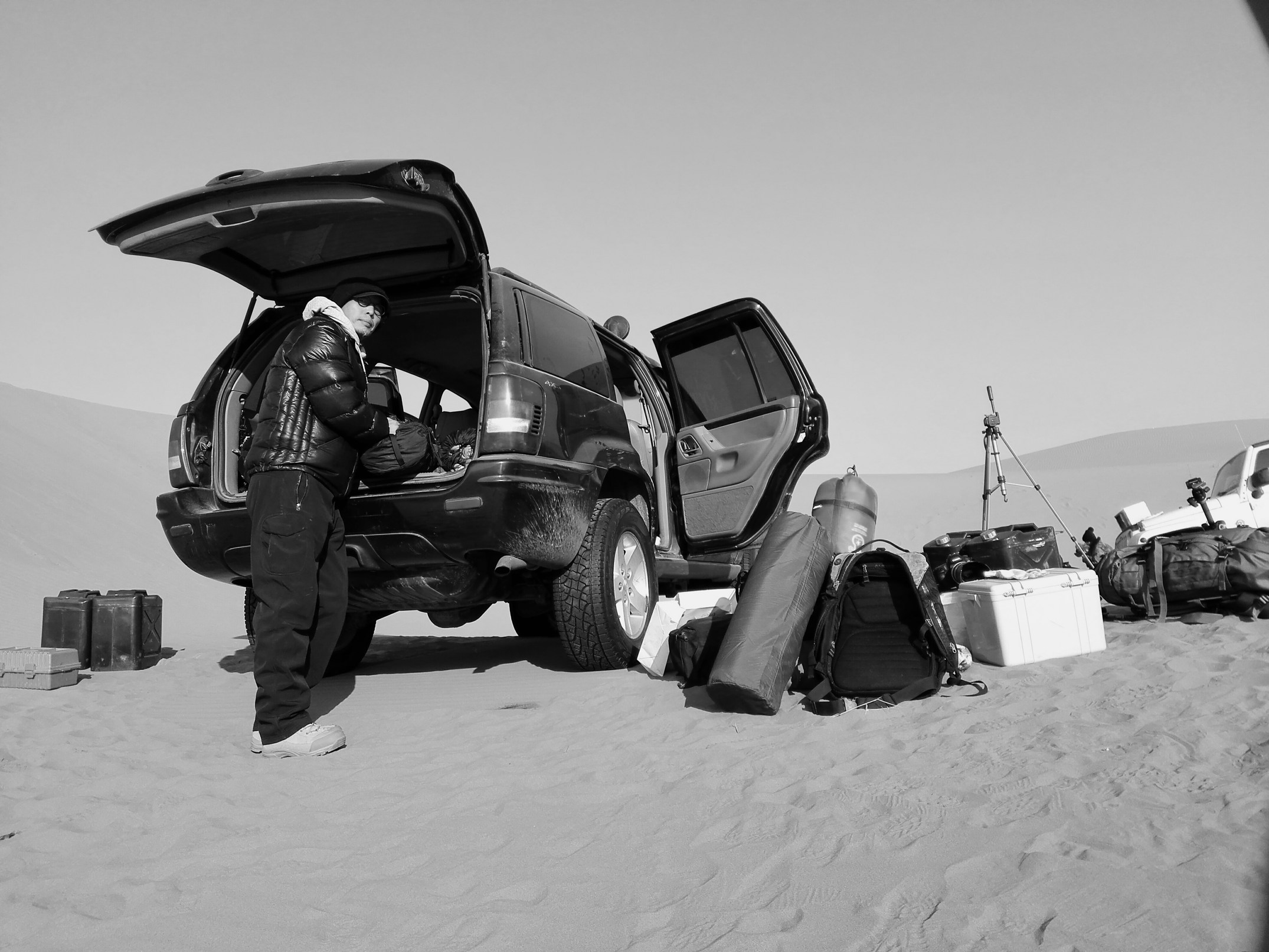
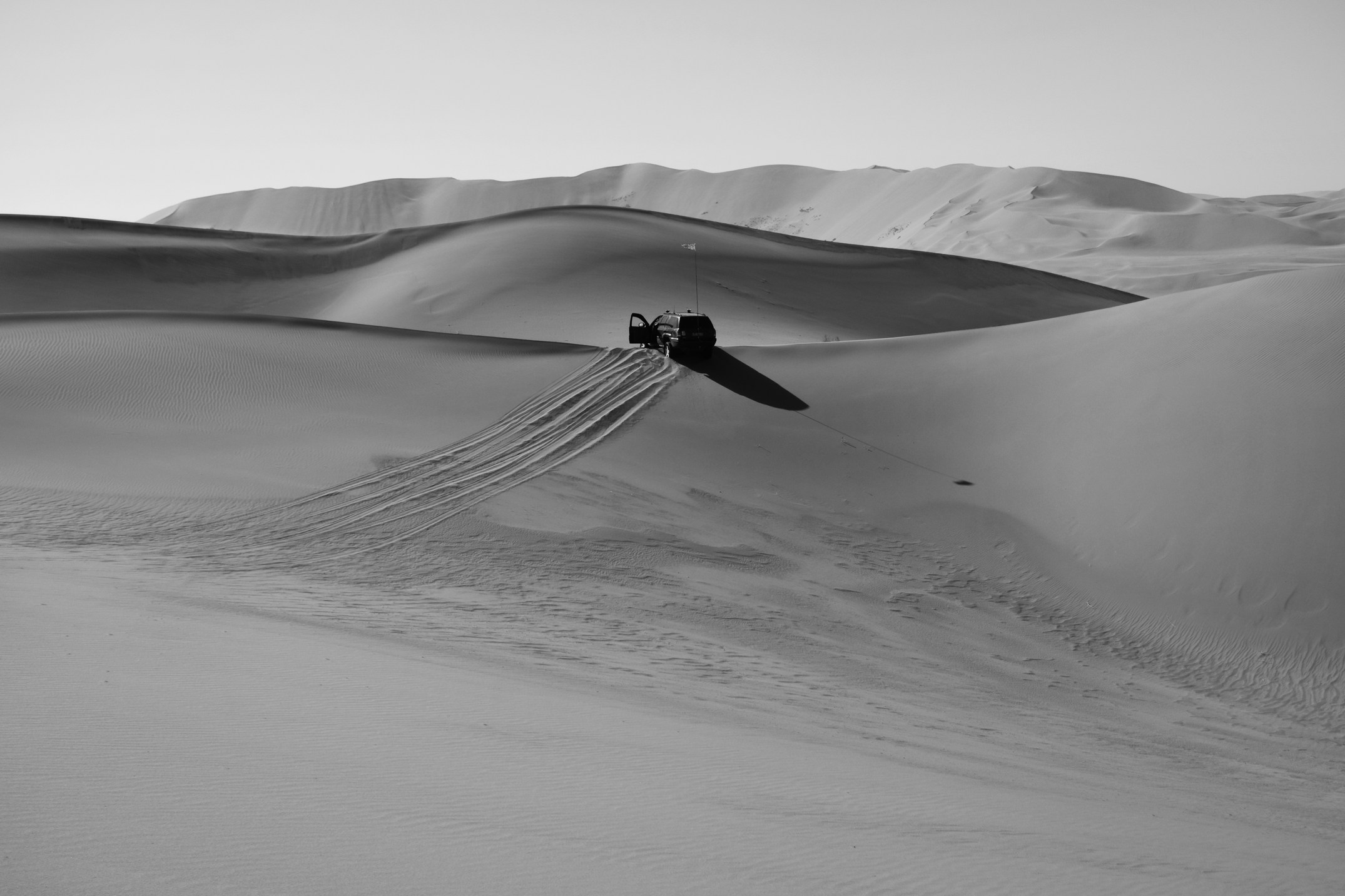
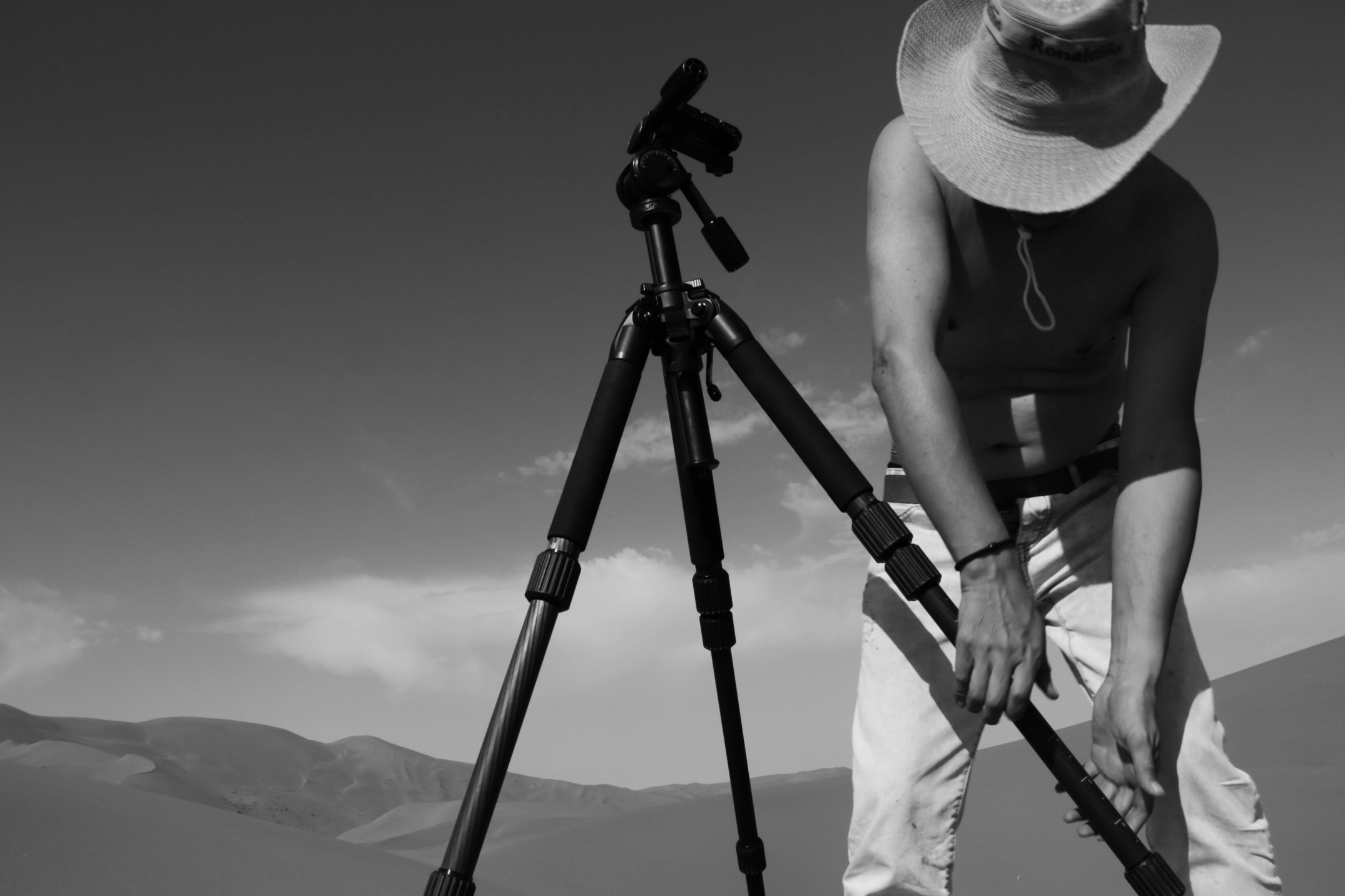
让我联想班纳姆的是,马泉对沙漠所倾注无限热爱,只不过在这里,对莫哈韦沙漠的探索变成了对戈壁的好奇,西方转换到了东方,另一方土壤,另一个时空,但至少,有一点是相通的:他们早已将沙漠融入灵魂。从2006年起,马泉便开着他的越野车,翻越中国北部与蒙古边境戈壁沙漠的座座沙丘,至今13年从未间断。他的每一次沙漠之行,或许早已无法用“旅途”来定义,而是将自己的身心全部沉浸在这沙漠的景致之中,与沙漠同呼吸,被另一种时空所围绕,被另一种气氛所包围。
自上世纪初始,中国西北(陕西、甘肃、青海、宁夏、内蒙)的风貌已经成为了中国现代与当代艺术家不断描绘和讨论的对象,但这并非是马泉无数次前往沙漠的缘由,事实上,从拥有言说的渴望,到逐渐确认以“艺术”方法呈现他与沙漠极其“私密”的关系,距离他首次踏入沙漠也过去了6年。而正是这种渴望,推动着马泉开始不断以“日志”,记录沙漠,丈量自己。
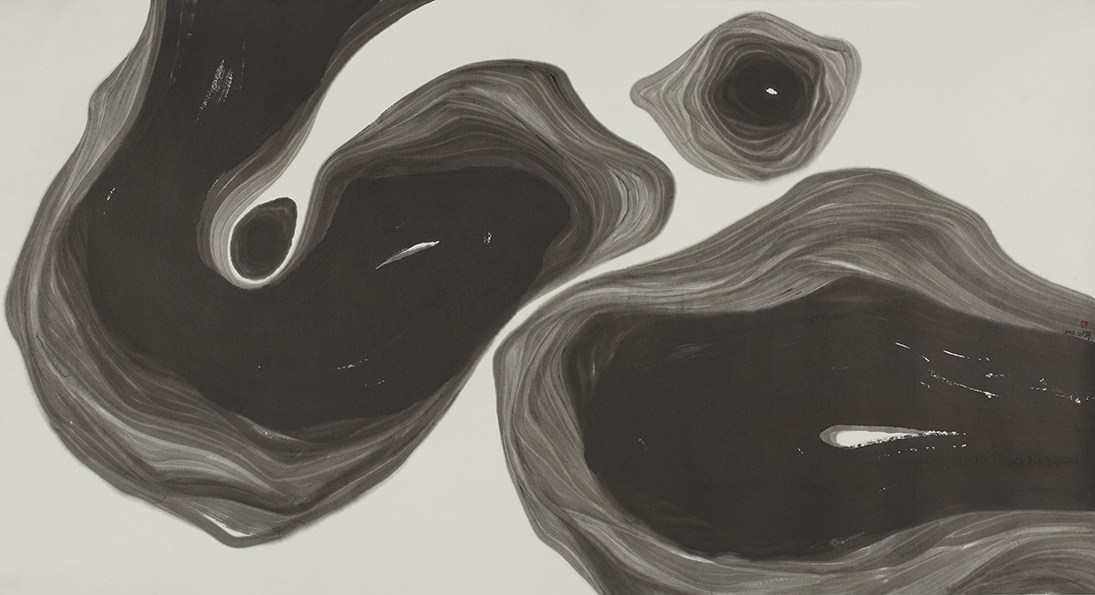
相较于传统的文字写作,马泉以手稿,绘画,视频影像,声音艺术丰富着他的“日志”,深圳关山月美术馆举办的个展《叠加态》也成为了马泉近10年来艺术与人生的阶段性总结。这十年对沙漠的专注,引领着马泉超过了空间、时间的界限,语言、声音和图像的坐标,人类学与社会学的限制;也让我们见到了一个全新的,摆脱我们原来固有想象的生态语境。“子非鱼安知鱼之乐?” 马泉在自己的视频作品中,引用《庄子·秋水》中的典故,阐明了自己的态度。
What reminds me of Banham is Ma Quan’s infinite love for the desert, but here, the exploration of the Mojave Desert has become a curiosity about the Gobi Desert, the West changed to the East, another soil, another time and space. But at least, one thing is the same: they have already integrated the desert into their soul. Since 2006, Ma Quan has been driving his off-road vehicle over the sand dunes of the Gobi Desert on the border between northern China and Mongolia, for 13 years consecutive years. Each trip to the desert can no longer be defined by the "journey", but rather by immersing his body and soul in the desert landscape, breathing with the desert, being surrounded by another time and space, surrounded by another atmosphere.
Since the beginning of the last century, the northwestern China style (Shaanxi, Gansu, Qinghai, Ningxia, Inner Mongolia) has become the object of continuous depiction and discussion by modern Chinese and contemporary artists, but this is not the reason why Ma Quan has traveled to the desert so many times. In fact, it has been six years since he first stepped foot into the desert. From his eagerness to speak to speak, to the gradual confirmation of his “artistic” approach to presenting his extremely “private” relationship with the desert. It is this eagerness that drives Ma Quan to continue to use a "journal" to record the desert and measure himself.
Compared to traditional writing, Ma Quan uses manuscripts, paintings, video images and sound art to record in his journal. The solo exhibition "Superimposed" held by the Shenzhen Guanshanyue Art Museum has also become a summary of the art and life stages of Ma Quan for nearly 10 years. This past decade's focus on the desert has led Ma Quan to surpass the boundaries of space and time, the coordinates of language, sound and image, and anthropological and sociological limits. It also gives us a whole new ecological context, free from our inherent imagination. “If you are not a fish, how do you know the joys of a fish?”. In his video works, Ma Quan cited the allusions from“Zhuangzi Qiu Shui” to relay and express his attitude.
沙漠与风Desert and wind
“沙尘被风吹了起来。帐篷前坐着一位身着旧棉袄的老者和一位年轻的女子。老人在沙上作画,一笔接着一笔,口中说到:巽卦(Souen)在易经中一阴爻伏,巽为风,中上卦,它如影随形,又无影无踪。风带走了时间,改变着空间,这正是它神秘的力量。” 荷兰纪录片导演尤里斯·伊文思在电影《风的故事》中安排了这样一幕场景。那一年,伊文思已年近鲐背,重回中国,重返戈壁沙漠,来实现他一直渴望实现的梦想:拍摄无形的风。在亲身经历和拍摄了全世界先锋与革命运动之后(从西班牙内战到抗日战争,从越南战争到南美革命),伊文思选择了一处没有斗争更没有人际的场所进行拍摄——回归沙漠。
在这里自然条件均以一种极端的方式在相互作用着,绵延不绝的沙丘,高低起伏的沙坑,还有漫天飞舞的沙粒,而“风”正是这一切作用的始作俑者,它将岩石风化成沙,吹向四方,与地质运动共同影响着这片大地的地貌变化。不同纬度间的温度差导致的气压差异,形成了“风”:风是水平空间内的空气运动,却能够在任何非设想的情况之下改变环境。
寻找词源,我们发现风(译注:意大利语中vento意为“风”)来源于拉丁语“venire”(译注:意大利语中venire含有到来,前往的意思),意味着逐渐向我们靠近的运动轨迹(而并非远离),如同受外力突然形成的物体,比如——空间。同样地,风也是一种无形的运动,我们看不见它的身影,却可以通过各种“压制”地貌而成的纹理,各种它造成的现象和影响感知它的存在。因此,或许我们总将沙漠认为是一块不曾随着时间而改变的“磐石”,与人世隔绝,但事实上,每时每刻它都在发生着无尽的变化。
但这与岩石上“风化”痕迹的显而易见不同,观察者如不细心,很难发现其中的变化与差异。一旦我们用“沙漠”去命名一个场域之时,天然地便将这个空间所有的地理地貌演变,过去与未来的痕迹,时间与运动的变化都排出在讨论之外。而在这些地貌变化之中,却也同时蕴含着诸如原始图像,秘密文字等,待我们解读的内容。
"The dust was blown up by the wind. There was an old man in an old cotton jacket and a young woman sitting in front of the tent. The old man wrote on the sand, one stroke after the other, as his mouth uttered: in “The Book of Changes” Xun (Souen) is 一阴爻伏,巽为风,中上卦. It is there for a moment, and then gone without a trace. The wind takes away time and changes space, this is its mysterious power.” Dutch documentary film maker Joris Ivens set the scene for this cinematic tale in the movie "The Story of the Wind." That year, at nearly 90 years old, Ivens returned to China and the Gobi Desert to fulfill the dream he had always wanted to achieve: to photograph the invisible winds. After personally experiencing and filming pioneer and revolutionary movements from around the world (from the Spanish Civil War to the War of Resistance Against Japan, from the Vietnam War to the South American Revolution), Ivens returned to the desert where there was no struggle and no human contact to shoot.
Here, natural conditions interact in an extreme way, such as endless sand dunes, the undulating sand pits and flying grains of sand. The "wind" is the cause of all these effects. Turns the rocks into sand and blows them in all directions. This, together with the geological movement effects the geomorphology changes of the land. The difference in air pressure caused by the temperature difference between different latitudes forms "wind". Wind is the movement of air in the horizontal space, but can change the environment in any unexpected situation.
Looking for the etymology, we can find that the word “wind” comes from the Latin word “venire” (note: in Italian vento means “wind”), which means a track of motion that moves gradually towards us (rather than away from us), like an object suddenly formed by a force such as space. Similarly, the wind is also a kind of invisible movement, we can’t see it, but we can perceive it through various textures that “suppress” the landscape, and the phenomena and impact that is caused by its existence. So, perhaps we think of the desert as a "rock" that has not changed over time, isolated from the world, but in fact, it is undergoing endless changes each and every moment.
But this is very different from the traces of "weathering" on the rocks. If the observers are not careful, it is difficult to find the changes and differences. Once we name a field a "desert", we naturally exclude from the discussion all the physical evolution of the space, traces of the past and future, and changes in time and movement. But in the midst of these changes, there is also something to be said for the original images, and the secret text, which will be interpreted by us.
沙漠,是最为极端的生存空间:人类必须面对一切不适居住的外部条件;植物和动物需要顽强地面对气候和地理的恶劣条件。但沙漠并不因此只有无尽的沙尘,却依然个充满了生命力的空间。在《叠加态》之中,马泉并没有停止他对与沙漠(与风)的探索,展览本身变成了一次探索的过程,科学考证,地理发现,人类学研究相互交织其中。
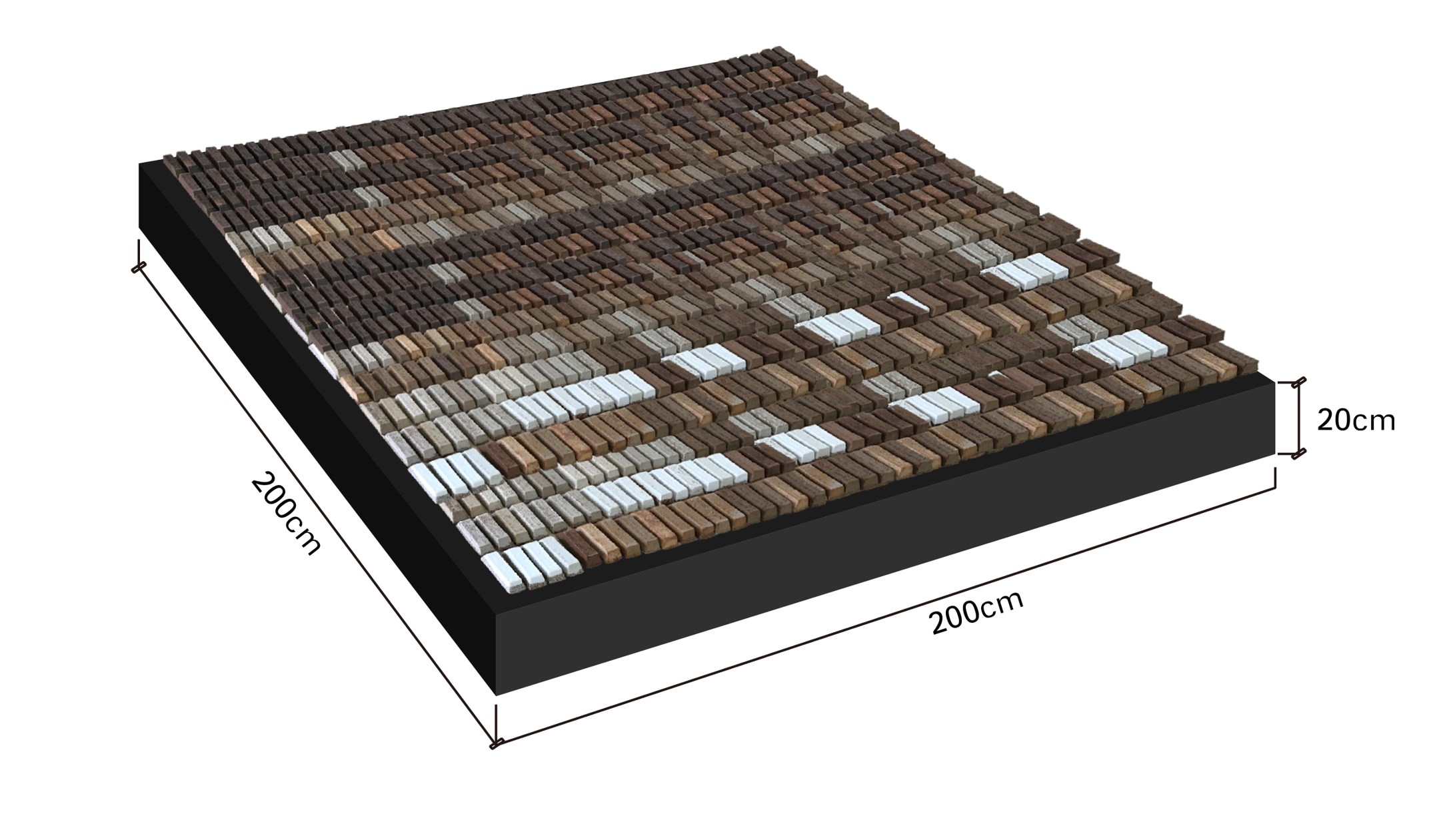
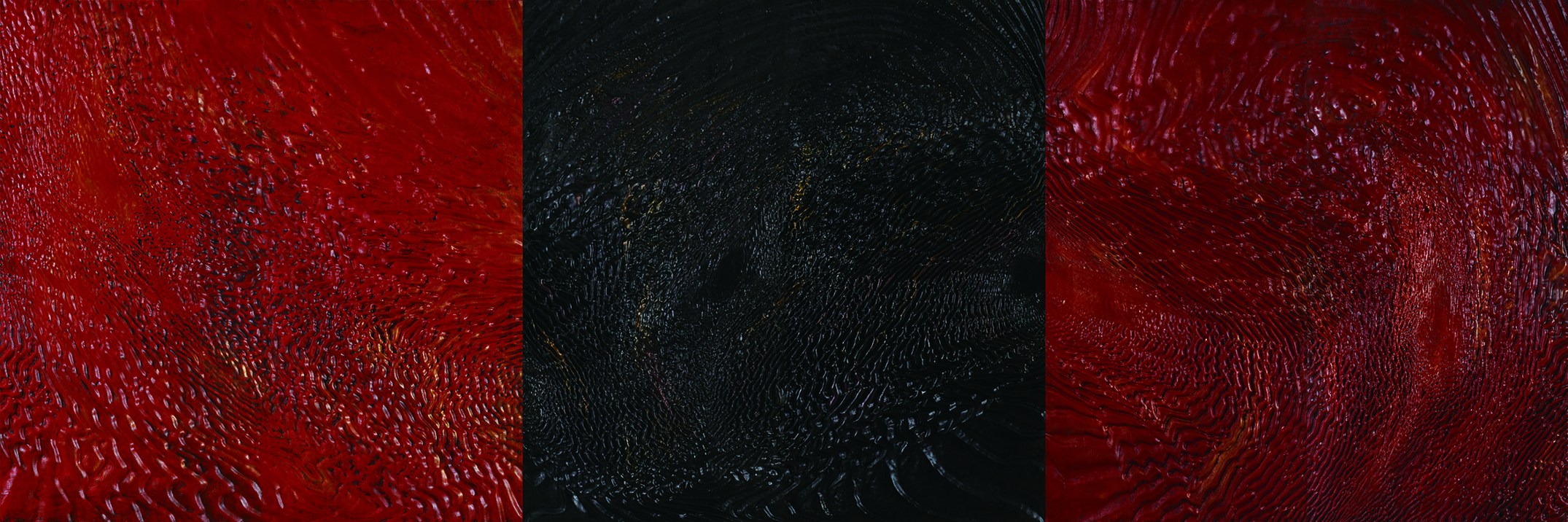
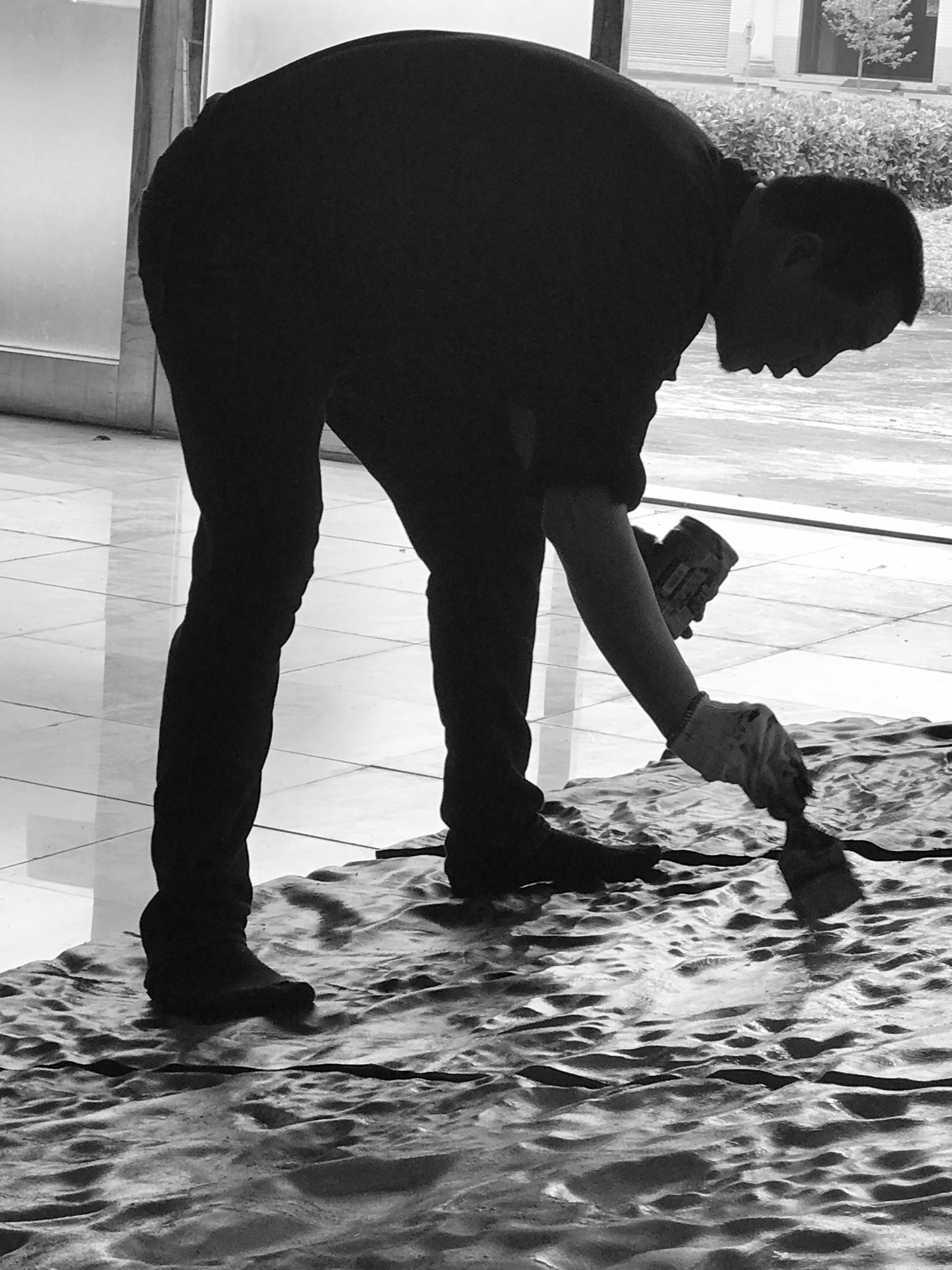
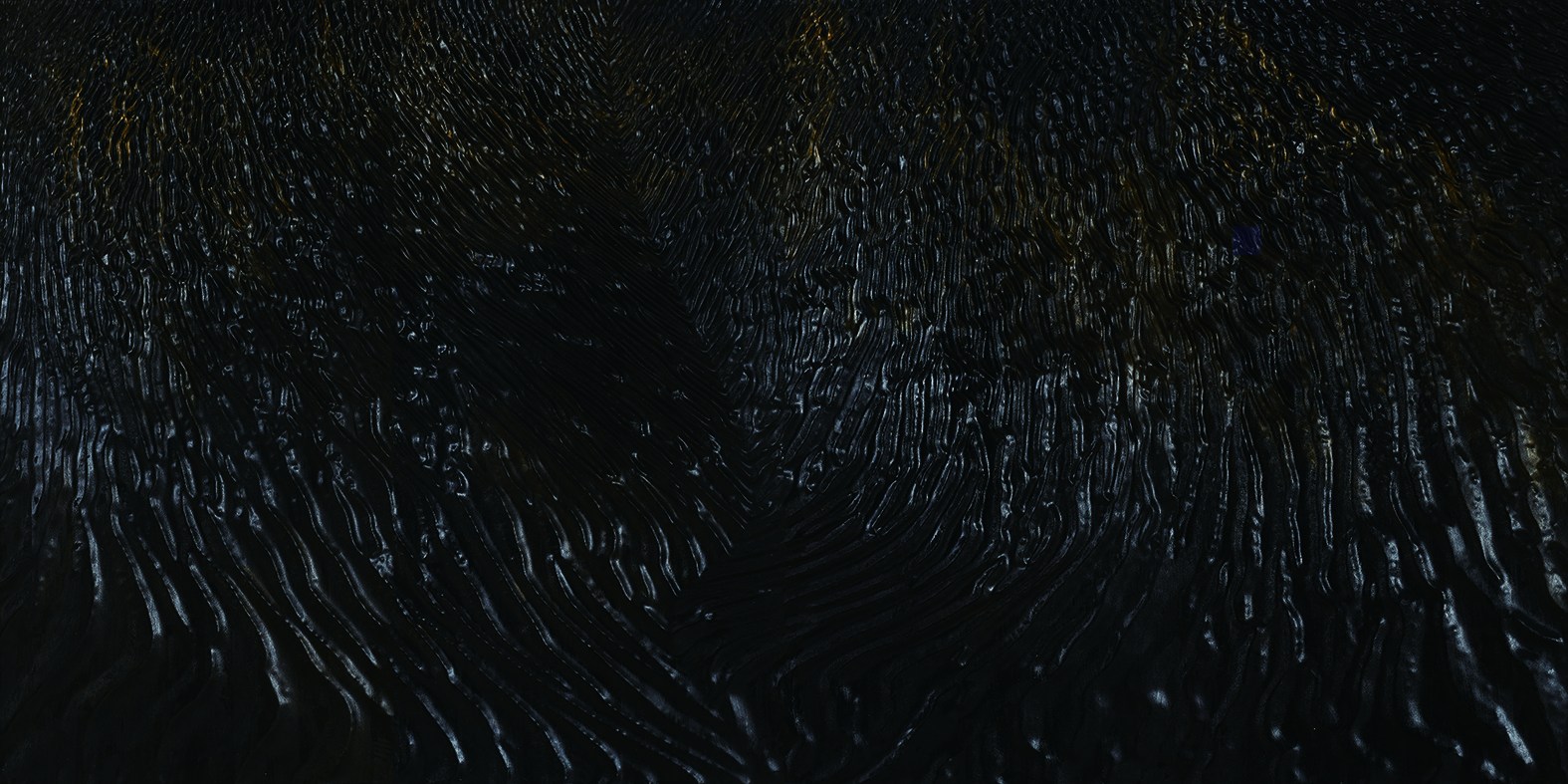
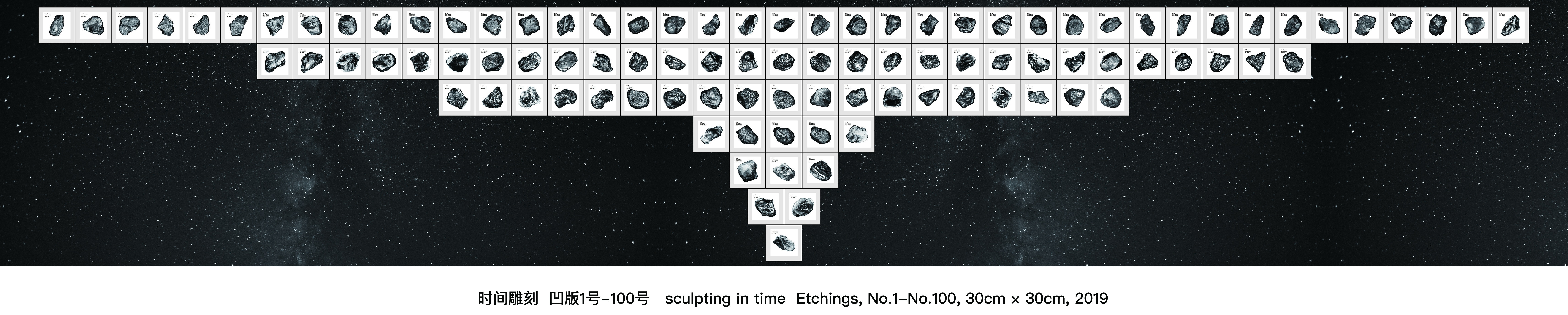
从铜版系列作品《时间雕刻》,到超过600块沙尘与瓷泥烧制样品所组成的作品《瓷沙编码》,马泉在被看作是同一化的宏观世界中,呈现出微观世界的多样性与复杂性。每一粒沙的形成,是一次特定的过程,都拥有专属时空的演变结果,它们或许是尘土,玉石,石英的分解后的一粒尘埃,来自不同的经纬度,相互混合,相互叠加,在不断的运动中形成全新变化的状态。
The desert is the most extreme living space: humans must face all the uninhabitable external conditions, and plants and animals need to face the harsh conditions of climate and geography. But the desert is not only endless sand and dust, but also a space full of vitality. In "Superimposed State", Ma Quan did not stop his exploration of the desert (and the wind), the exhibition itself became a process of exploration in which scientific research, geographical discovery, and anthropological research intertwined.
From the copper series "Time Engraved" to the work of more than 600 sand and porcelain clay samples in "Porcelain Code", Ma Quan presents the diversity and complexity of the microcosm in the macro-world which is regarded as homogenization The formation of each grain of sand is a specific process, which has an evolution of exclusive time and space. They may be dust, jade, quartz, or a grain of dust after decomposition. They come from different latitudes and longitudes, are mixed with each other, superimposed on each other, in constant motion a new state of change is formed.
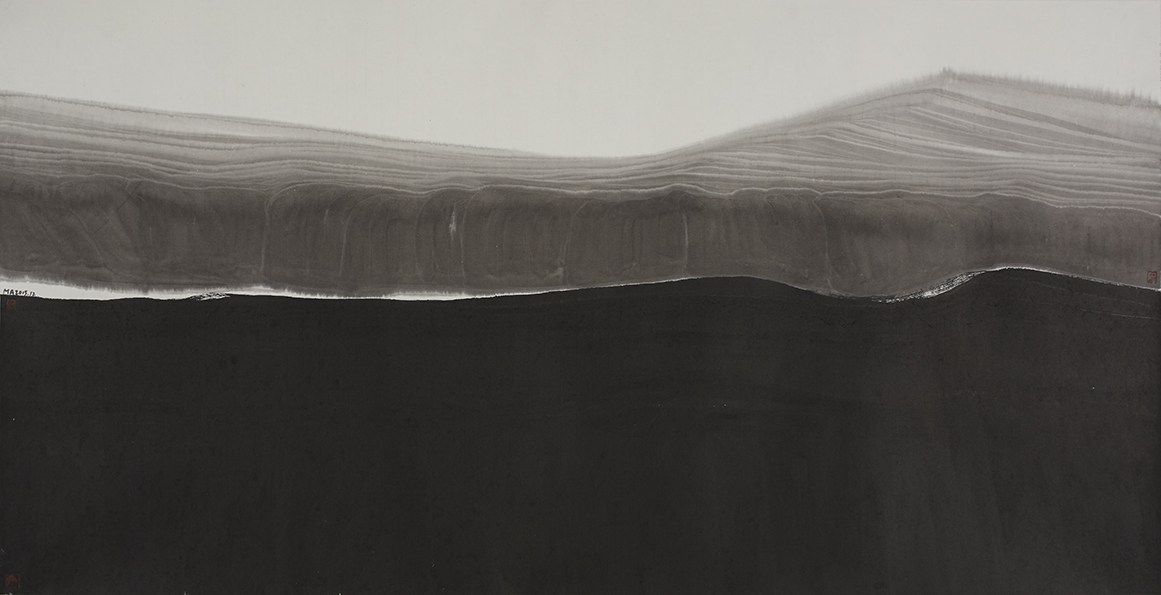
“如果风决定着沙的命运,那么谁来决定人的命运?”马泉在向观众提问的同时,自身也在思考这个问题。沙丘短暂多变的形象成为了马泉作品的来源,从纸本水墨到综合材料,马泉尝试刻下的是超越时间概念的形态。他也因此丰富着《马记》(马泉日志)的系列,从文字记录到声音记录,这些作品之间形成了一种生态关系,这也是马泉作品的源泉。
"If the wind determines the fate of the sand, who will determine the fate of the people?" Ma Quan was also pondering this issue while asking questions to the audience. The fleeting image of the sand dunes has become the source of Ma Quan's works. From paper and ink to comprehensive materials, Ma Quan tried to engrave the form of transcending the concept of time. He also enriched the series of "Ma Ji" (Ma Quan's journal), from written records to sound records, these works form an ecological relationship, which is also the source of Ma Quan's works.
一沙一世界One sand, one world
深入讨论每件作品中的绵延,再现与叠加时,会发现这些独立的作品彼此之间又紧密相关,展览《叠加态》将不同的作品建立了没有层级的联系,形成了自身的小宇宙。展览被分成了“无始”“无内”“无外”“无穷”四个章节,这四个标题将沙漠空间的定义表达得淋漓尽致,同时提出了另一种视角,另一种度量,另一种声音和另一种科学,如同德勒兹与瓜塔里在《千高原》中提到的“游牧科学”。
沙漠的空间不再是某种规则下的空间,不能再被简单的定义和理解,也无法再阻止它的移动,换言之,我们不能再仅凭现有的地图或者预设的视角来探索这一空间,没有人能明确告诉我们去往何方,也不再存在某种固有的价值评判体系。而我们感兴趣的是“沙漠”自我定义的可能性。而在马泉的作品中,正蕴含着这种可能性。
In an in-depth discussion of the continuity, reproduction and superposition of each piece of work, it is found that these independent works are actually closely related to each other. The exhibition "Superimposed State" establishes a different level of connection between different works without hierarchy and forms its own small universe. The exhibition is divided into four chapters: “No Beginning”, “No Inside”, “No Outside” and “Infinity”. These four titles express the definition of desert space, and propose another perspective, another measure, another sound and another science, like Deleuze and Guattari's "nomadic science" mentioned in the “Thousand Plateaus”.
The space of the desert is no longer a space under certain rules. It can no longer be simply defined and understood, nor can it be stopped from moving. In other words, we can no longer explore this space with existing maps or preconceived notions. No one can tell us exactly where we are going, and there is no longer an inherent value evaluation system. And what we are interested in is the possibility of the “desert” defining itself, and in Ma Quan's works, that is the possibility.
正是因为马泉对于中国城市社会密度和建设发展进程的熟知,他在沙漠中所经历的一切体验变得更加难能可贵,通过重新明确人与人,人与物之间的关系,帮助我们找回已经模糊的认知。“稀少”变成了一种最佳态,“缺失”连接了往昔与今日,“微观”通往“宏观”,反之亦然。
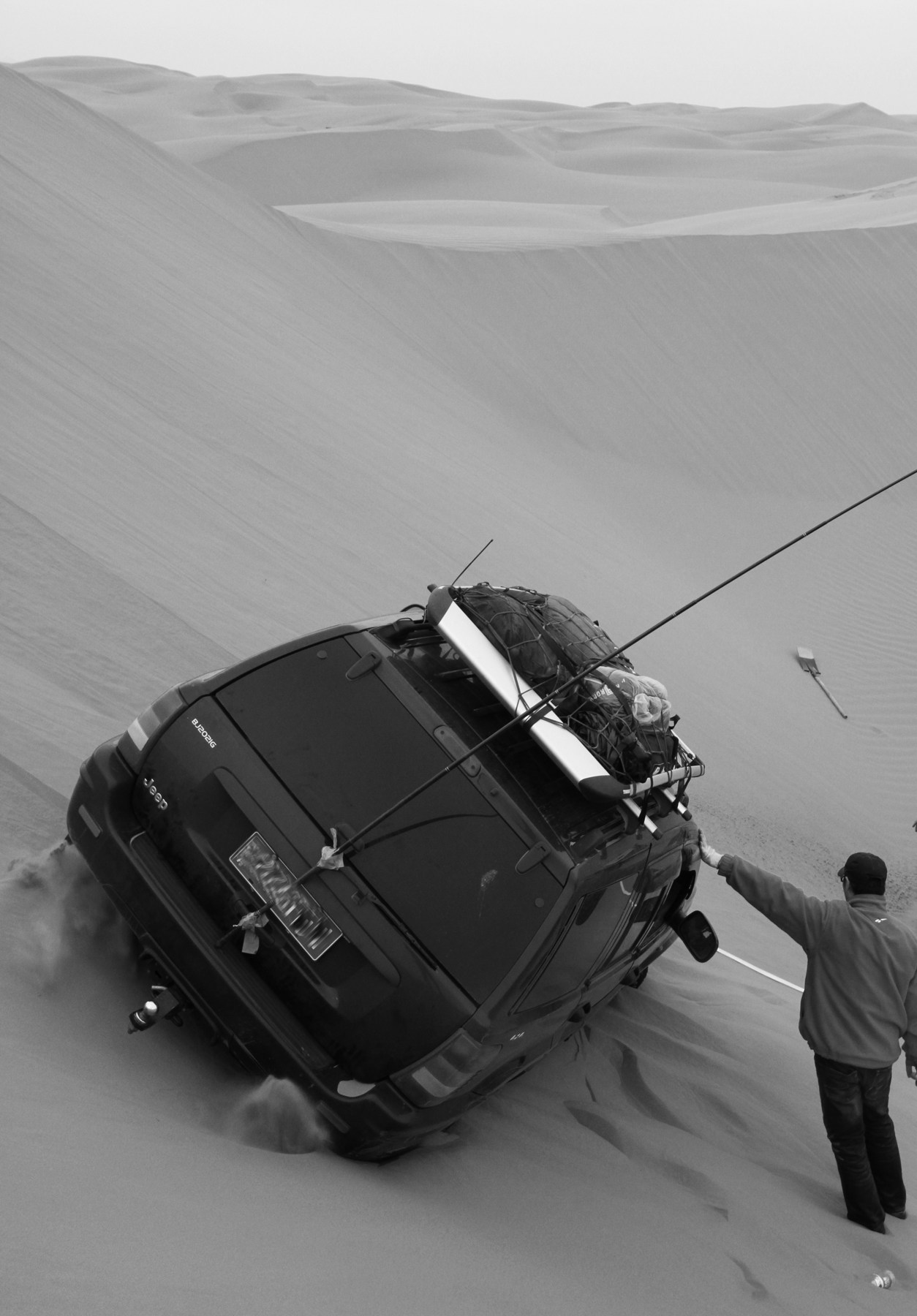
因此在《叠加态》中没有什么是绝对抽象的问题,每一件作品都试图找回人那“人性的,太人性的”具体问题,正如影片结尾,当越野车陷入沙坑,摄影机倒下的画面,回归现实。
It is precisely because Ma Quan is familiar with the density of society and the process of construction and development in Chinese cities, that all the experiences he experienced in the desert have become more valuable. By redefining the relationship between people, and people and things, it will help us find our way back to what we already vaguely know. “Scarcity” has become an optimal state, “absence” has connected the past to the present, “micro” to “macro” and vice versa.
Therefore, there is nothing in the "Superimposed State" that is absolutely abstract. Every piece of work is trying to find the specific problem of "human, too human". Just as the film ends, when the off-road vehicle falls into the bunker, the camera falls, and returns to reality.
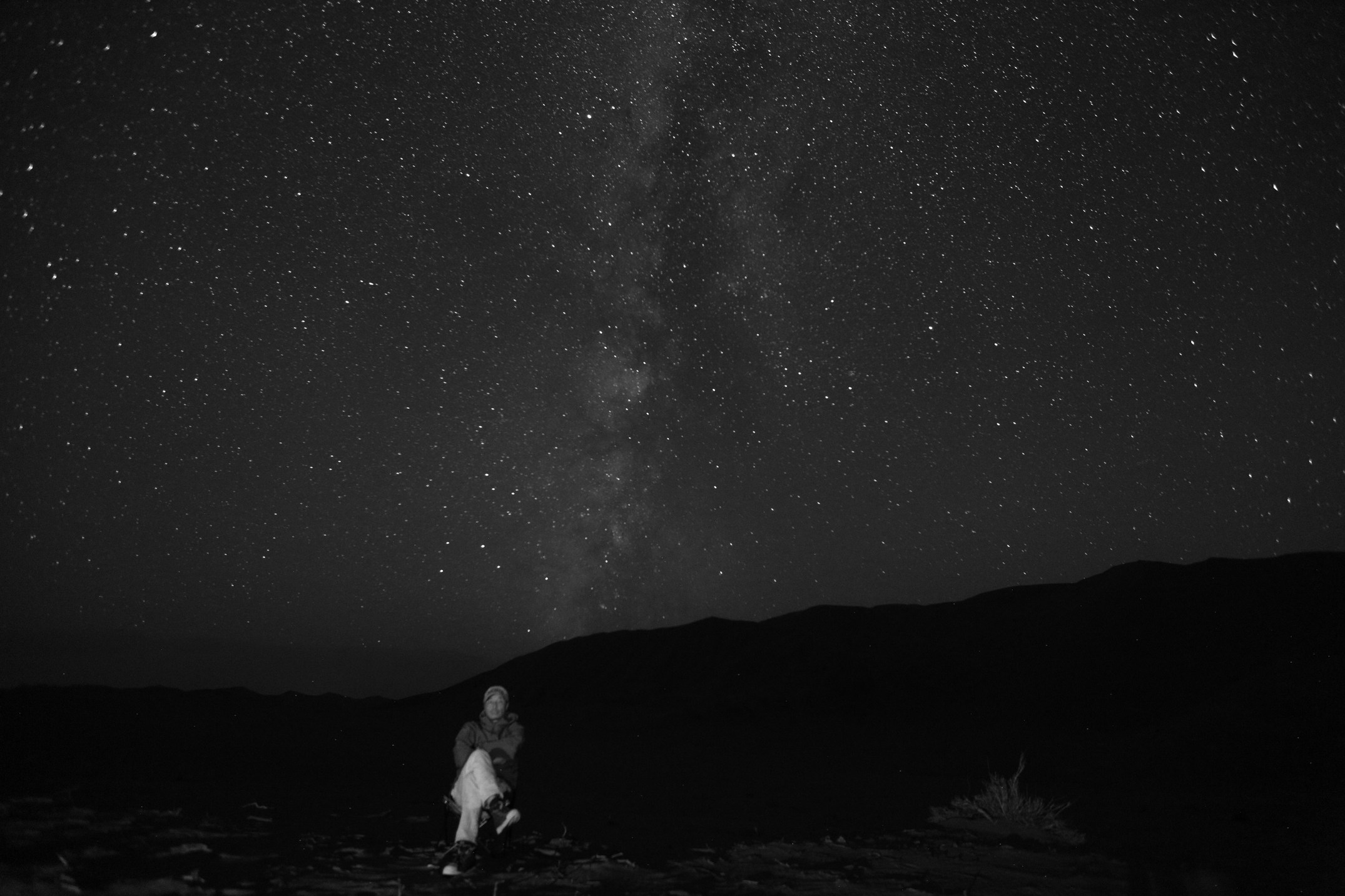
“此刻” 马泉这样描述道,“我可以清楚地感觉到远古时代的信息,夜晚,我赤着脚站在沙上,抬头看着密集深层的宇宙星空,感觉就像在沙尘之间漂浮星星,并在银河系中变成漫游尘埃…”。
"At the moment," Ma Quan said, "I could feel the clear message of the ancient times. At night, I stand barefoot on the sand and look up at the dense depths of the universe. It feels like I am the floating stars in midst of the dust, and then I become the roaming dust in the galaxy..."
马泉文献The documentary of Ma Quan's works
叠加态 · 马泉作品展Superposition State: Exhibition of Ma Quan Works
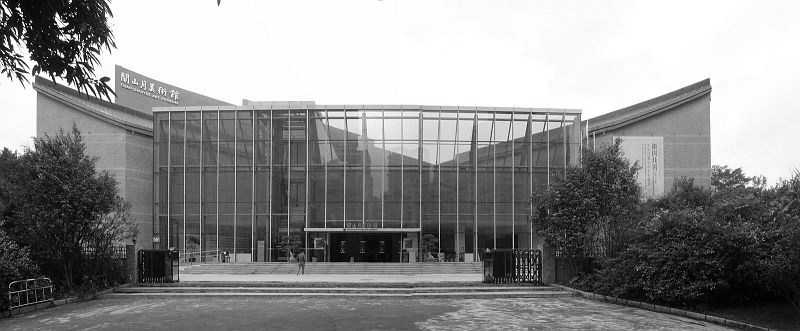
深圳关山月美术馆Guan Shanyue Art Museum in Shenzhen
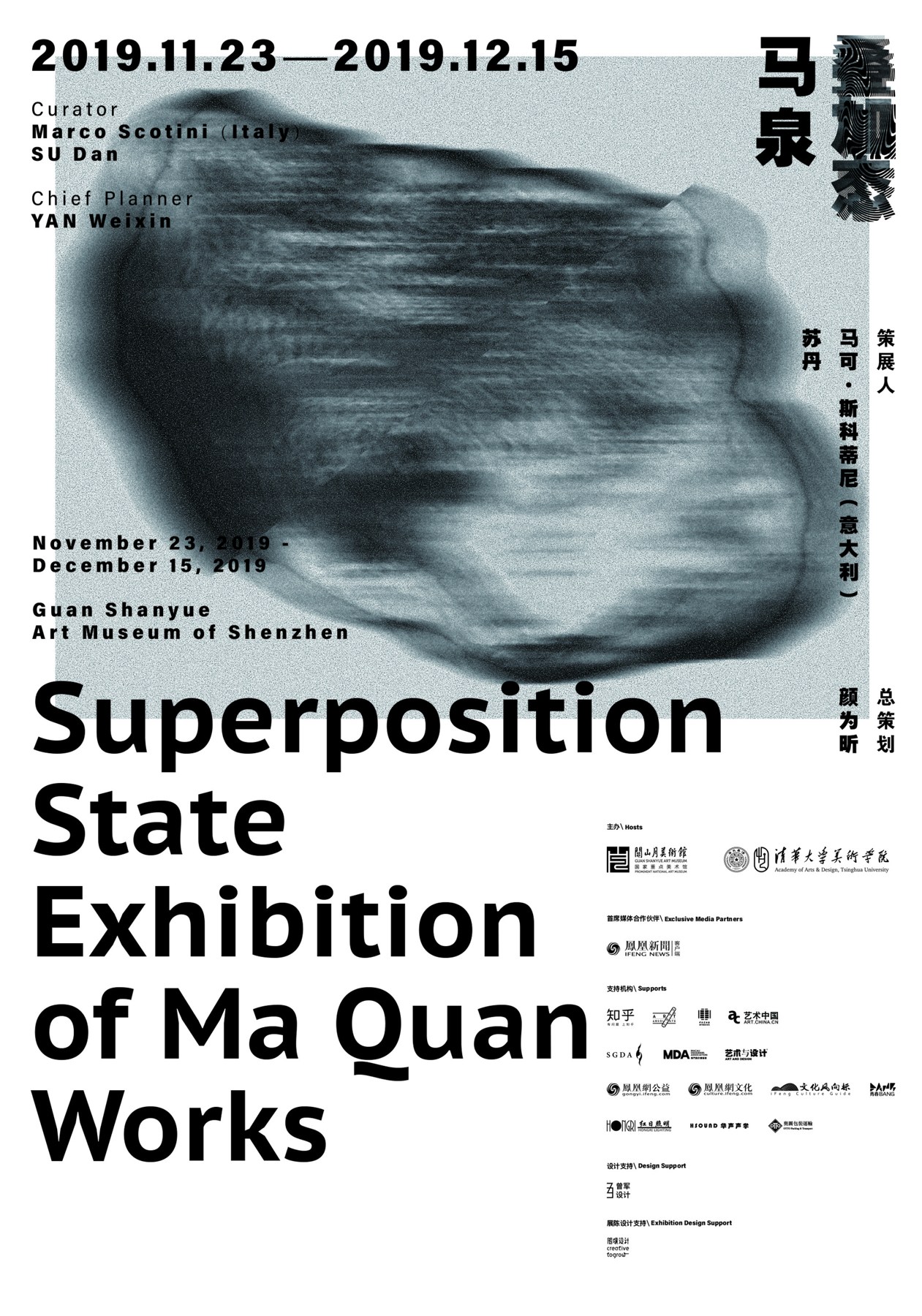
作为关山月美术馆即将于2019年岁末推出的重要展览,《叠加态/马泉作品展》将集中展现马泉近十年创作的有关沙漠主题的综合媒介作品。
展览拟分“无始”“无内”“无外”“无穷”四个单元,力图呈现马泉独特的艺术世界:源于沙漠,却超越了沙漠;来自经验,却颠覆了经验。跨过世俗与探险、文明与洪荒、声音与图像、时间与空间的重重界限,其多态叠加的作品不仅意味着生命个体对线性时间的不断超越,而且隐喻着微观世界的或然性以及多元状态并存的可能性。
在此基础上,作为未来叠加态的观看体验亦将成为其艺术世界的衍生部分。
As an important exhibition initiated by Guanshanyue Art Museum at the end of 2019,Superposed State, Ma Quan’s Works exhibition, focuses on the various multi-media works about desert theme that Ma Quan has created in the past decade.
The exhibition is composed of four units: “No Beginning”, “No Inside”, “No Outside” and “No End”, representing Ma Quan’s unique artistic perspective: they are rooted from but beyond deserts, they are from but against experiences.Transcending through the boundaries between the secular and expeditions, civilization and primeval chaos, sounds and images, time and space, Ma Quan’s works not only mean individual beings’ continuous travelling beyond the linear time but also imply the probability of microcosm and the possibility of coexisting of multiple states.
Based on the above, the interaction from viewers will also be woven into Ma’s narrative, and become part of his art pieces.
马泉Ma Quan
清华大学美术学院视觉传达设计系 教授Professor, Department of Visual Communication Design, Academy of Arts & Design, Tsinghua University
长期致力于探索空间叙事与设计跨界的可能性,多年持续赴沙漠腹地考察体验,以探寻自然空间中生命个体的自我超越状态,以及宏观场域与微观物体的共存关系。近十年来陆续使用水墨、装置、影像、音乐、版画等综合媒介进行实验性创作,力图于物性与心性的不断碰撞中显现视觉语言与综合媒介的叙事性关联,并在叙事与媒介、媒介与语言、呈现与观看之间构建新的转换机制。
He is committed to the long-term the possibility of exploring space narrative and design crossover, and he has continued to visit the hinterland of desert for many years to explore the self-transcendence state of life individuals in natural space and the coexistence relationship between the macroscopic fields and microscopic objects. In the last decade, he has used mix media such as ink, installation, video, music and printmaking to carried through experimental creation. He tried to show the narrative relationship between visual language and mix media in the continuous collision between materiality and nature of mind, and constructed a new transformation mechanism between narrative and media, media and language, presenting and viewing.